


Found in the Field
Lepidolite with Quartz or Fluorite — Lavender Micro-Crystal Specimen, 14g — Field Find
Lepidolite with Quartz or Fluorite — Lavender Micro-Crystal Specimen, 14g — Field Find
Couldn't load pickup availability
THE FIND
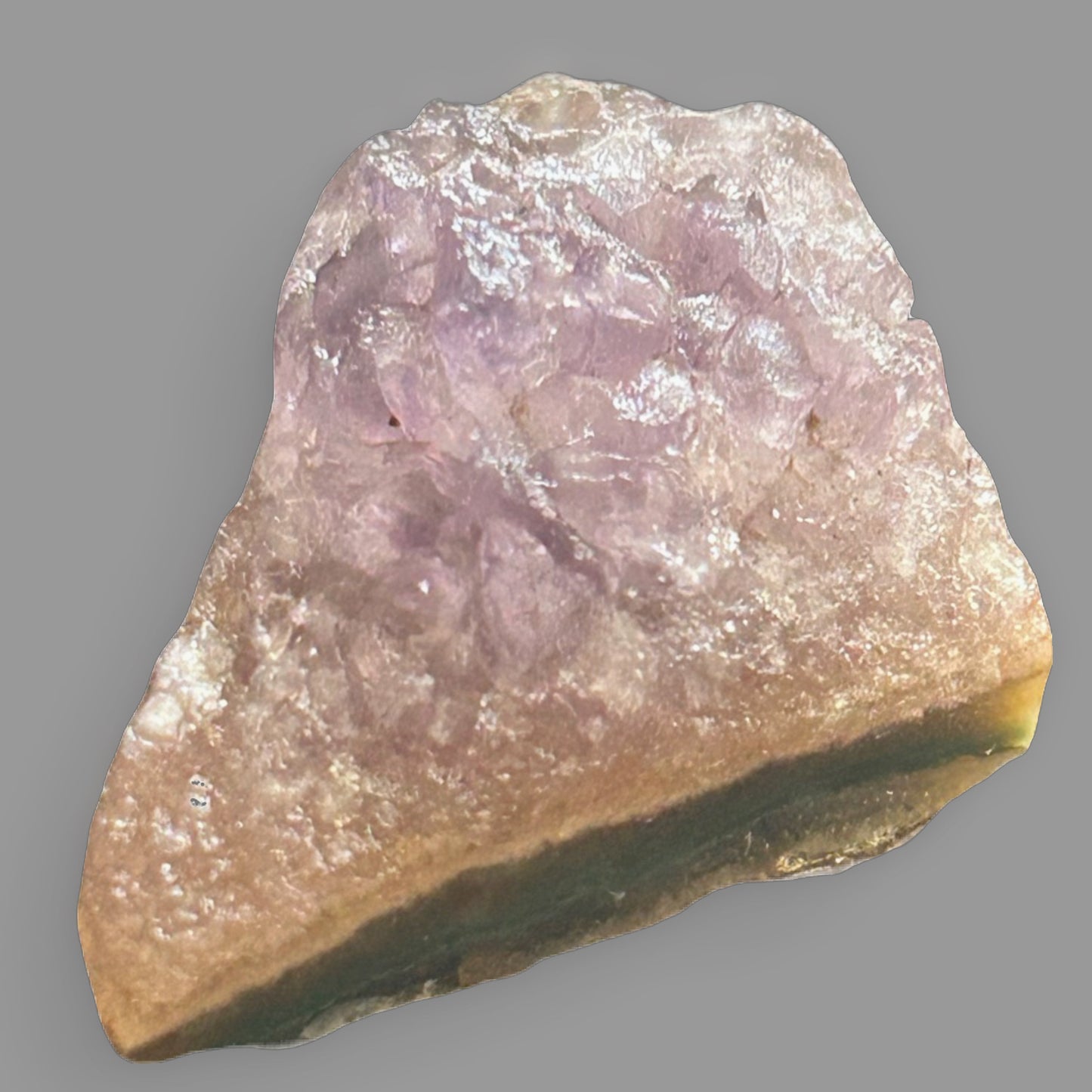
A small mineral specimen, 14g — lavender and purple micro-crystal surface over a yellow-cream and green banded base, with multiple distinct color zones visible in the photograph. Cataloged as lepidolite with an associated mineral identified as quartz or fluorite. The companion mineral is unconfirmed. Some specimens arrive with a complete answer. This one doesn’t — and that is part of what makes it interesting.
WHAT WE KNOW
This specimen is cataloged as lepidolite with associated quartz or fluorite; no independent mineral analysis has been performed, and the identification is presented as a catalog identification rather than a laboratory-confirmed result. Lepidolite is a lithium-rich mica mineral (K(Li,Al)₃(AlSi)₄O₂₀(OH,F)₄) that typically appears in lavender, lilac, pink, or gray tones and occurs in lithium-rich granitic pegmatite environments, often alongside tourmaline, quartz, feldspar, and fluorite. The lavender surface on this specimen has a micro-crystalline texture; the yellow-cream and green color zones in the base add additional complexity. The multi-zone coloration visible in the photograph is consistent with a fluorite specimen (which commonly shows green, yellow, and purple color banding in the same crystal) or an amethyst/quartz specimen over a matrix, though the exact composition requires testing to confirm. The “quartz or fluorite” uncertainty is genuine and noted here because we will not describe material we cannot confirm. This specimen weighs 14g.
THE STORY
Lepidolite was one of the original sources of lithium when the element was first isolated in the early 19th century — the mineral’s name derives from the Greek lepidos (scale), referencing its characteristic scaly mica texture. Lithium, now familiar as the material in modern batteries, was named in 1817 by Johan August Arfwedson, who isolated it from petalite — another lithium silicate mineral that occurs alongside lepidolite in pegmatite environments. The lavender color of lepidolite comes from trace manganese. This small specimen carries that history regardless of what the secondary mineral ultimately proves to be.
WHY WE CHOSE IT
The color zoning is visually striking for a 14g specimen — the lavender surface against the yellow-cream and green base makes it more complex-looking than its size suggests. An accessible entry-point collector mineral at $25, with the honest uncertainty about the secondary mineral left open. A collector with access to mineralogical testing tools might enjoy resolving the question.
ABOUT THIS PIECE
Type: Lepidolite with associated quartz or fluorite (catalog identification; secondary mineral not independently confirmed; visual characteristics noted in description)
Weight: 14g
Locality: Not independently verified
Condition: Natural specimen — please review photographs for color zoning, lavender surface, and natural variation.
Quantity: 1 — one of a kind.
Share


Field Notes
Recovered and preserved as discovered.
Marks, textures, and imperfections remain untouched.