


Found in the Field
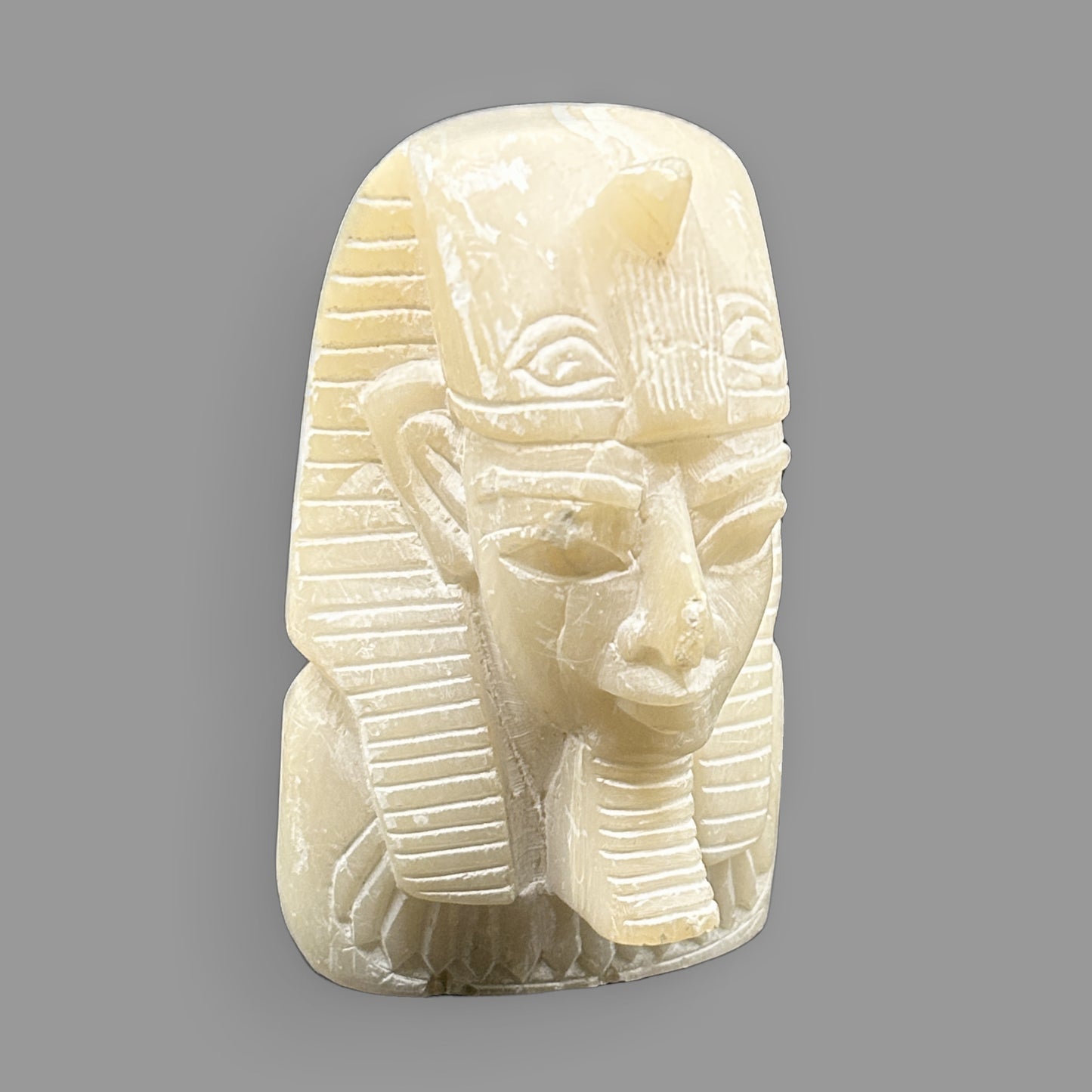
Egyptian Soapstone Pharaoh Bust – Tutankhamun / Ramesses II Style
Egyptian Soapstone Pharaoh Bust – Tutankhamun / Ramesses II Style
Couldn't load pickup availability
The Find
He has been here before. The face is familiar in the way that ancient things become familiar — absorbed into the visual memory of a civilization that can't stop looking back at Egypt. This pharaoh bust arrived carved from soapstone, its smooth contours and soft color variations shaped by a material that has been worked by human hands for thousands of years. The weight of it is real. The presence of it is real. It came home because some objects simply insist on it.
What We Know
Type: Decorative Sculpture / Pharaoh Bust
Style: Tutankhamun / Ramesses II Egyptian Revival
Material: Soapstone (steatite)
Color / Appearance: Warm stone tones with natural color variation; smooth finish with slight waxy surface texture
Size: [DIMENSIONS]
Weight: [WEIGHT]
Condition: Natural stone variations and minor imperfections present; no breaks or repairs noted
Soapstone — technically steatite — is one of the oldest carving materials in human history, used across cultures for thousands of years due to its softness, workability, and natural warmth. Egyptian Revival sculpture has been produced continuously since the 19th century, when Napoleon's Egyptian campaigns sparked a wave of fascination with pharaonic imagery across Europe and beyond. Pieces in this style range from ancient to contemporary; this one carries the quiet authority of something made with care.
Identification and provenance are based on the information currently available. Unless specifically stated, laboratory testing or documented provenance has not been performed.
The Story
The Face That Outlasted the Name
No one remembers who carved it first. The face came before the name, before the dynasty, before the historians arrived to write everything down. It was the face of someone who had stood in the sun long enough to understand that the sun does not care who you are — and had decided to be remembered anyway. The stone was chosen because it was soft enough to work and hard enough to last. Both things turned out to be true. Here it is.
Traditional & Metaphysical Associations
Pharaonic imagery has carried symbolic weight across cultures for millennia. The bust form — head and shoulders, the seat of identity and authority — is associated in many traditions with leadership, clarity of purpose, and the kind of presence that doesn't require explanation. Soapstone itself is considered by some to be a grounding material, associated with stability, patience, and the long view. Egyptian Revival objects are often kept as anchors: things that remind a space that time is longer than any single moment in it.
These are traditional cultural associations and are not scientifically established effects.
Why We Chose It
The carving is clean, the material has genuine weight and warmth, and the face holds its authority without trying too hard. It works on a study shelf, a mantle, a desk — anywhere that benefits from a little ancient gravity and something worth looking at twice. We picked it up because it was worth picking up, and that's usually reason enough.
Found in the Field isn't about finding the most perfect thing. It's about noticing the thing that might otherwise have been overlooked.
About This Piece
- Natural / vintage / antique / handmade: Handmade / Natural material
- One of a kind: Yes
- Quantity available: 1
- Natural stone color variation and minor surface imperfections are part of the material; no breaks, chips, or repairs noted
Because natural and handmade objects are unique, the actual piece photographed is the piece you will receive.
Share


Field Notes
Recovered and preserved as discovered.
Marks, textures, and imperfections remain untouched.