


Found in the Field
Barite Crystal Specimen — Desert Rose Formation, Layered Blades, 122g — Field Find
Barite Crystal Specimen — Desert Rose Formation, Layered Blades, 122g — Field Find
Couldn't load pickup availability
THE FIND
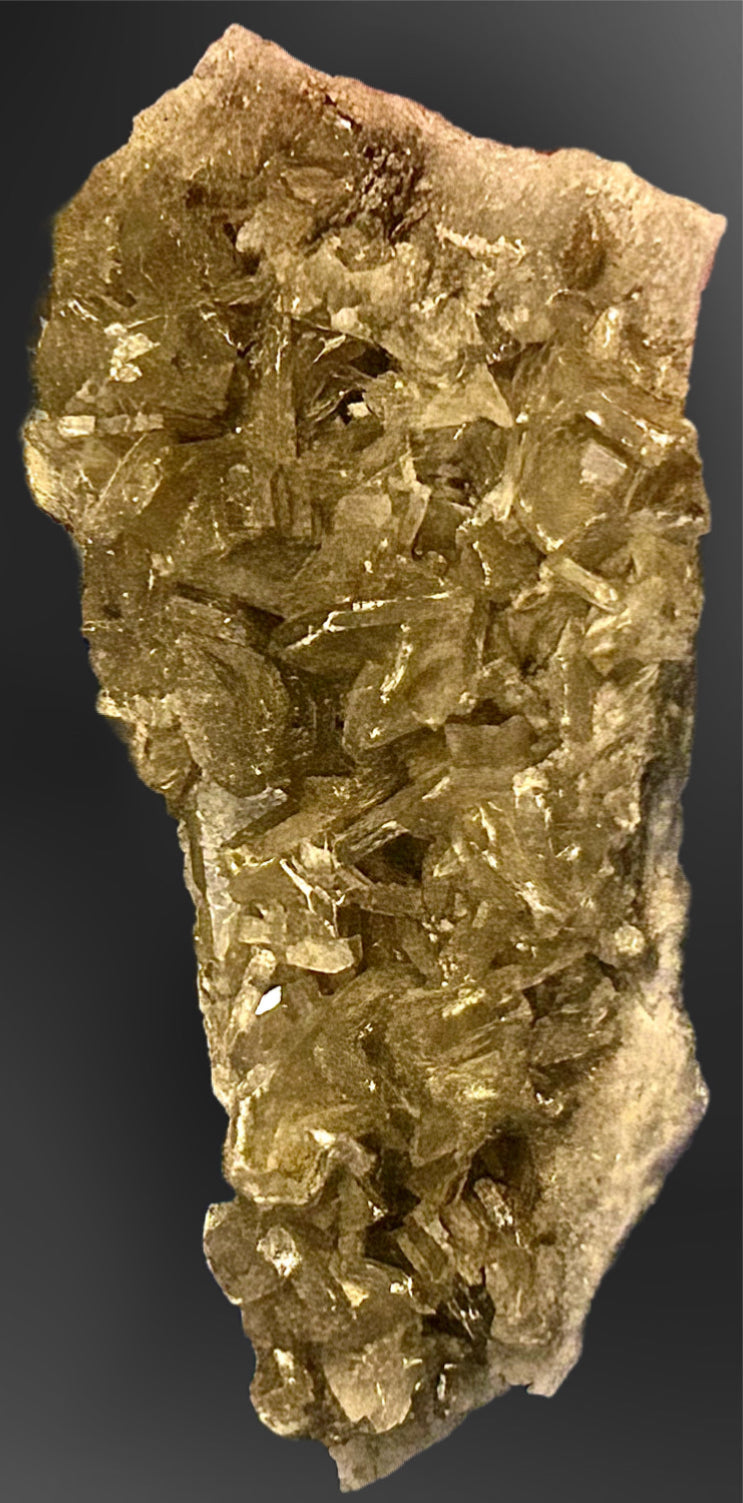
A natural barite crystal specimen, 122g — softly layered blades and rosette-like structures in the desert rose formation, where crystals radiate outward in floral patterns as if the earth learned how to bloom. Delicate in form, unexpectedly heavy in hand. A frozen bloom from an ancient landscape.
WHAT WE KNOW
Barite (barium sulfate, BaSO₄) has one of the highest specific gravities of any non-metallic mineral (4.5), which makes the 122g weight of this specimen immediately surprising given its delicate blade and rosette structure. The desert rose habit forms when barite crystals grow around sand grains in arid, evaporite-type environments — the crystals radiate outward from a central point or grow in overlapping tabular blades, incorporating sand into the structure and producing the characteristic petal-like formations. The contrast between the fragile floral form and the unexpected density is barite’s defining sensory quality. Locality not independently verified.
THE STORY
At 122g, this is a substantially larger barite specimen than our 41g bladed rosette — the additional mass makes the weight-versus-form contrast even more pronounced. Barite’s name comes from the Greek “barys” (heavy), and the density that earned it that name is what makes desert rose specimens particularly memorable to handle: they look like they should weigh almost nothing, and they don’t. The same mineral produces the industrial drilling mud used in oil wells worldwide and the geological flowers found in desert formations.
WHY WE CHOSE IT
The desert rose formation on this piece is well-developed and the blade structure is clearly visible. At 122g it has significantly more presence than a smaller barite specimen — the weight-versus-form contrast is more pronounced, and it displays well as a centerpiece. A strong piece for a crystal habit collection or a geological display focused on form over color.
ABOUT THIS PIECE
Type: Barite crystal specimen (barium sulfate, desert rose / bladed rosette habit)
Weight: 122g
Locality: Not independently verified
Condition: Natural specimen — barite blades can be fragile; handle with care. Please review photographs for crystal habit, form, and natural variation.
Quantity: 1 — one of a kind.
Share


Field Notes
Recovered and preserved as discovered.
Marks, textures, and imperfections remain untouched.