


Found in the Field
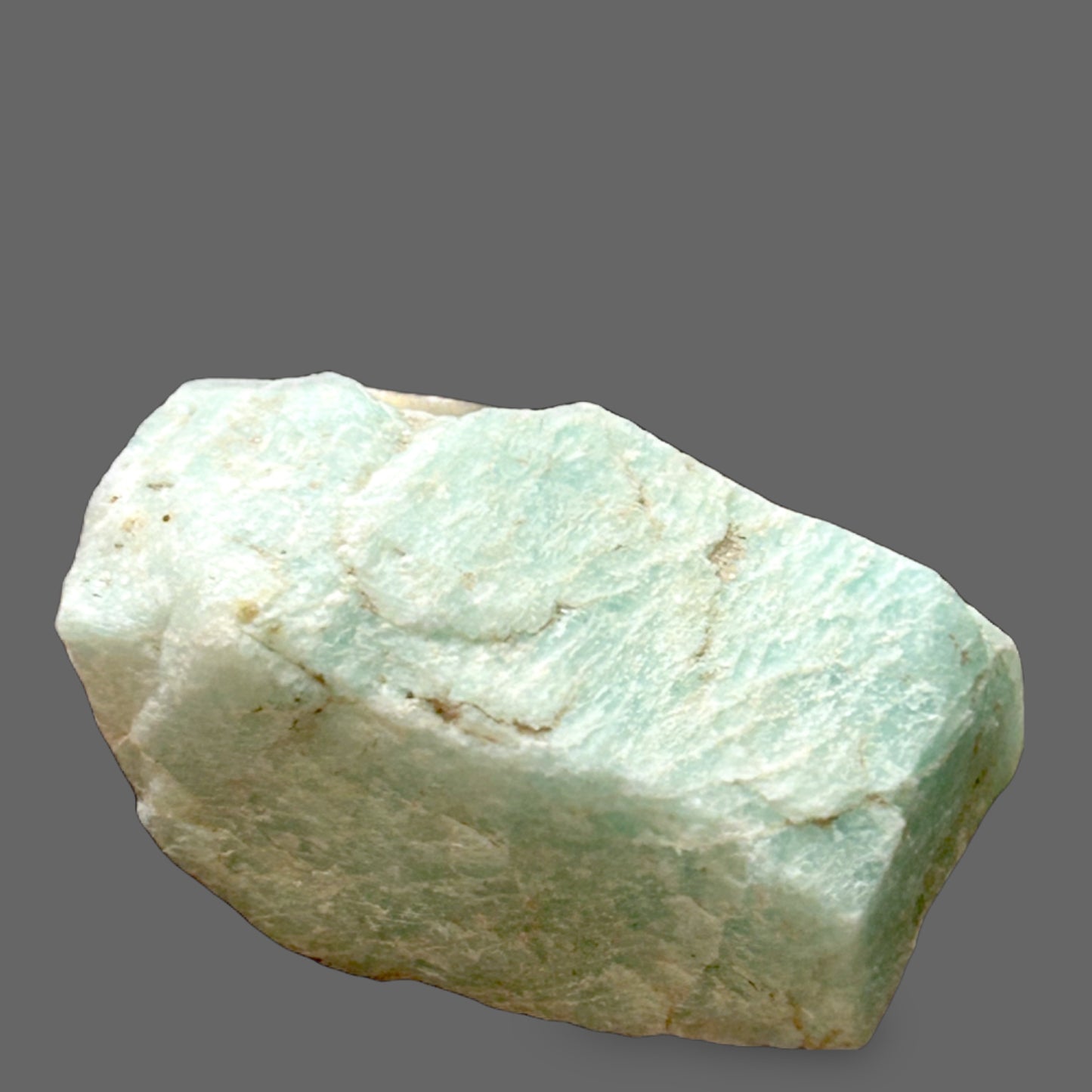
Amazonite Specimen — Blue-Green Microcline Feldspar, 11g — Field Find
Amazonite Specimen — Blue-Green Microcline Feldspar, 11g — Field Find
Couldn't load pickup availability
THE FIND
An amazonite specimen, 11g — cool blue-green microcline feldspar with the quiet color of water seen through stone. Small in size, notable in color. At 11 grams it is an easy piece to keep, carry, or add to a growing mineral collection.
WHAT WE KNOW
Amazonite is the blue-green to green variety of microcline, a potassium aluminum silicate (KAlSi₃O₈) feldspar. It is the color that distinguishes it — ordinary microcline is white to pale pink; amazonite’s blue-green coloration is produced by trace amounts of lead and water in the crystal structure, which was only confirmed by research in the 1980s. It forms in granitic rocks and pegmatites, often occurring alongside quartz, smoky quartz, and other pegmatite minerals. The pale white veining commonly visible in amazonite specimens is feldspar cleavage and albite intergrowth within the microcline. This specimen weighs 11g. Locality not independently verified.
THE STORY
Amazonite’s name comes from the Amazon River — though no significant amazonite deposits have ever been confirmed in the Amazon basin. The name predates modern mineralogy and likely reflects the green stones traded from the region in pre-Columbian and early colonial periods, which may or may not have been amazonite. The color mechanism was debated for over a century before trace lead was identified as the cause in the 1980s — one of the more recently resolved color mysteries in common mineralogy.
WHY WE CHOSE IT
The blue-green color is the whole case for this piece — the distinctive cool tone is immediately recognizable and gives even an 11g specimen a distinctly serene character. A compact and affordable entry point for feldspar collectors or anyone drawn to cool blue-green mineral color.
ABOUT THIS PIECE
Type: Amazonite (blue-green microcline feldspar)
Weight: 11g
Locality: Not independently verified
Condition: Natural specimen — please review photographs for color, veining, and natural variation.
Quantity: 1 — one of a kind.
Share


Field Notes
Recovered and preserved as discovered.
Marks, textures, and imperfections remain untouched.